
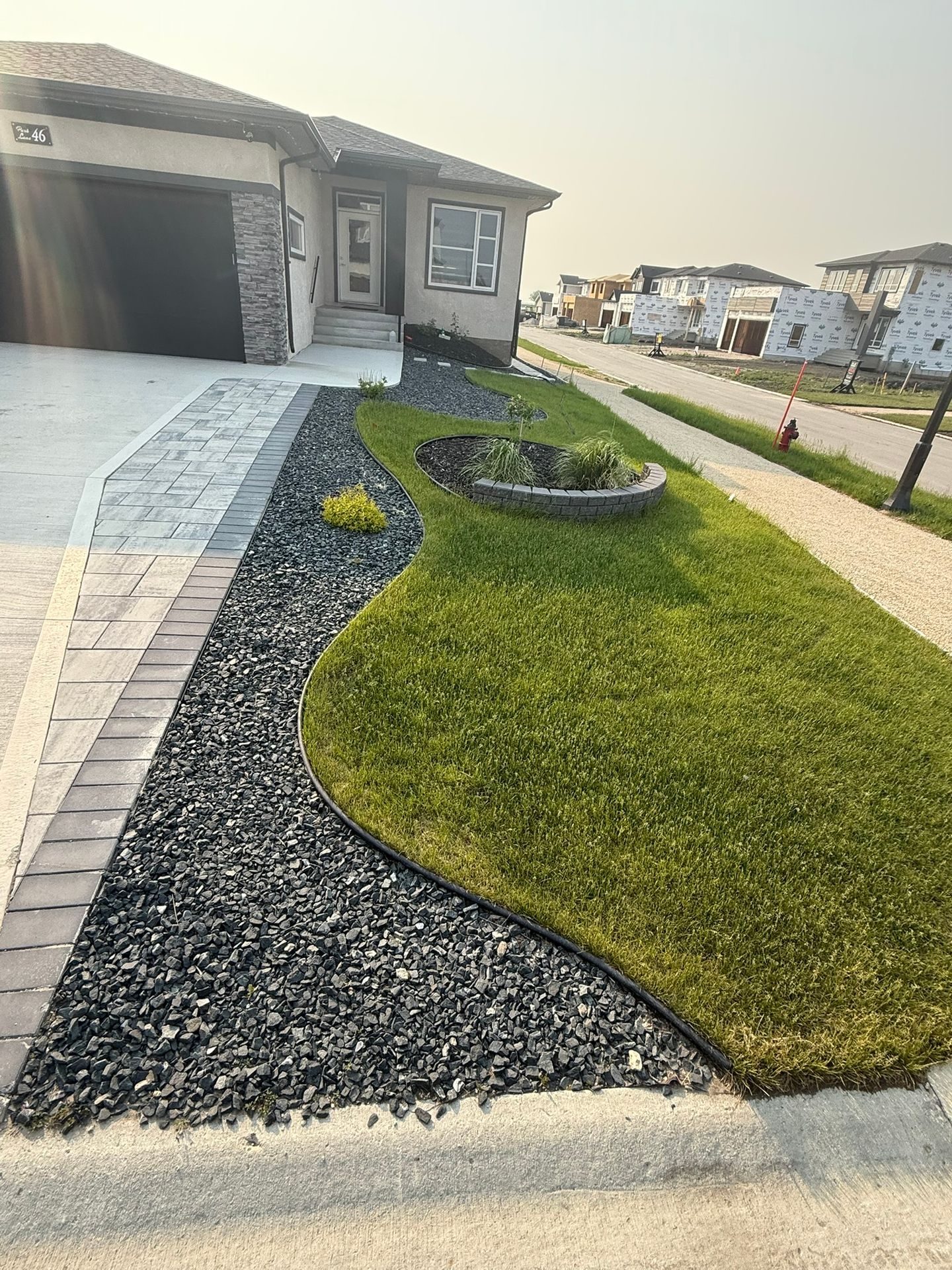
Sod Installation in Winnipeg
New lawns on properly graded and prepared ground, with enough topsoil under them to actually root.
Sod looks like the simplest thing on a landscaping quote. It is also the item that fails most often, and it nearly always fails for one of two reasons that have nothing to do with the sod itself.
What Actually Goes Wrong
Not enough topsoil. Sod laid on a thin skim over compacted clay has nothing to root into. It looks immaculate on the day, stays green for a few weeks on the moisture it came with, and then browns off through the summer because the roots never got anywhere.
This is the commonest shortcut in the trade and it is invisible at handover. A quote that is noticeably cheaper on sod is usually cheaper on the soil under it.
Not enough water. New sod needs a genuinely large amount of water for the first two to three weeks while it roots. More than people expect, and more than feels sensible. Nothing about a good installation survives a dry first fortnight.
What We Do
We correct the grade first, because a lawn is a surface water runs across and there is no point establishing one over a drainage problem. Then topsoil goes down at a depth the roots can use, gets levelled, and the sod is laid tight with staggered joints.
On a new-build lot that usually means stripping and grading what the builder left, which is rarely more than rough fill.
We also repair failed areas rather than always replacing a whole lawn. If two thirds of it is healthy, patching the third that is not is usually the sensible call, and we will say so.
Sod, Seed or Turf
Sod gives you an instant lawn and is what most people want. It costs more up front and needs the watering commitment.
Seed is cheaper and slower, and it needs weeks of consistent moisture to establish, which in practice means more total watering than sod rather than less. It suits large areas where instant results do not matter.
Artificial turf is worth considering for areas where a real lawn will not realistically thrive, such as deep shade, heavy traffic, or a small enclosed yard. We install that too.
Timing
The season runs from when the ground has dried out enough to work in spring through to freeze-up. Late spring and late summer into early fall are the easiest windows. Mid-summer installations work but demand considerably more water.
Because the Manitoba season is short, the calendar fills earlier than people expect. If you want a lawn this year, asking in March is a better plan than asking in June.
What's Included
- Grade corrected before any sod goes down
- Proper topsoil depth, not a dusting over clay
- Full new-build lawns and repair of failed areas
- Straight advice on watering through establishment
Other Services We Offer in Winnipeg
Sod Installation Questions
Why did my last sod die?
Most often not enough topsoil underneath it, or not enough water in the first three weeks. Sod laid directly on compacted clay has nothing to root into, so it survives on whatever moisture it arrives with and then browns off. The failure shows up weeks after it looked perfect.
How much topsoil should go under sod?
More than most quotes assume. A thin dusting over clay is the single most common shortcut in this trade and it is why lawns fail in their first season. We put down enough for roots to establish into rather than sit on.
When is the best time to lay sod in Winnipeg?
Late spring and late summer into early fall are both good. Mid-summer works but demands much more watering, because new sod in full prairie heat dries out fast. The season generally runs from when the ground has dried out in spring through to freeze-up.
How much do I need to water new sod?
A lot, and more than feels reasonable, for the first two to three weeks. This is the part that decides whether it takes. We will tell you exactly what it needs when we finish, and it is worth following, because no amount of good installation survives a dry first fortnight.
Get a Free Sod Installation Quote
Tell us what you are thinking and we will come and look at the property. You get a written estimate and a defined scope before anything is committed.